

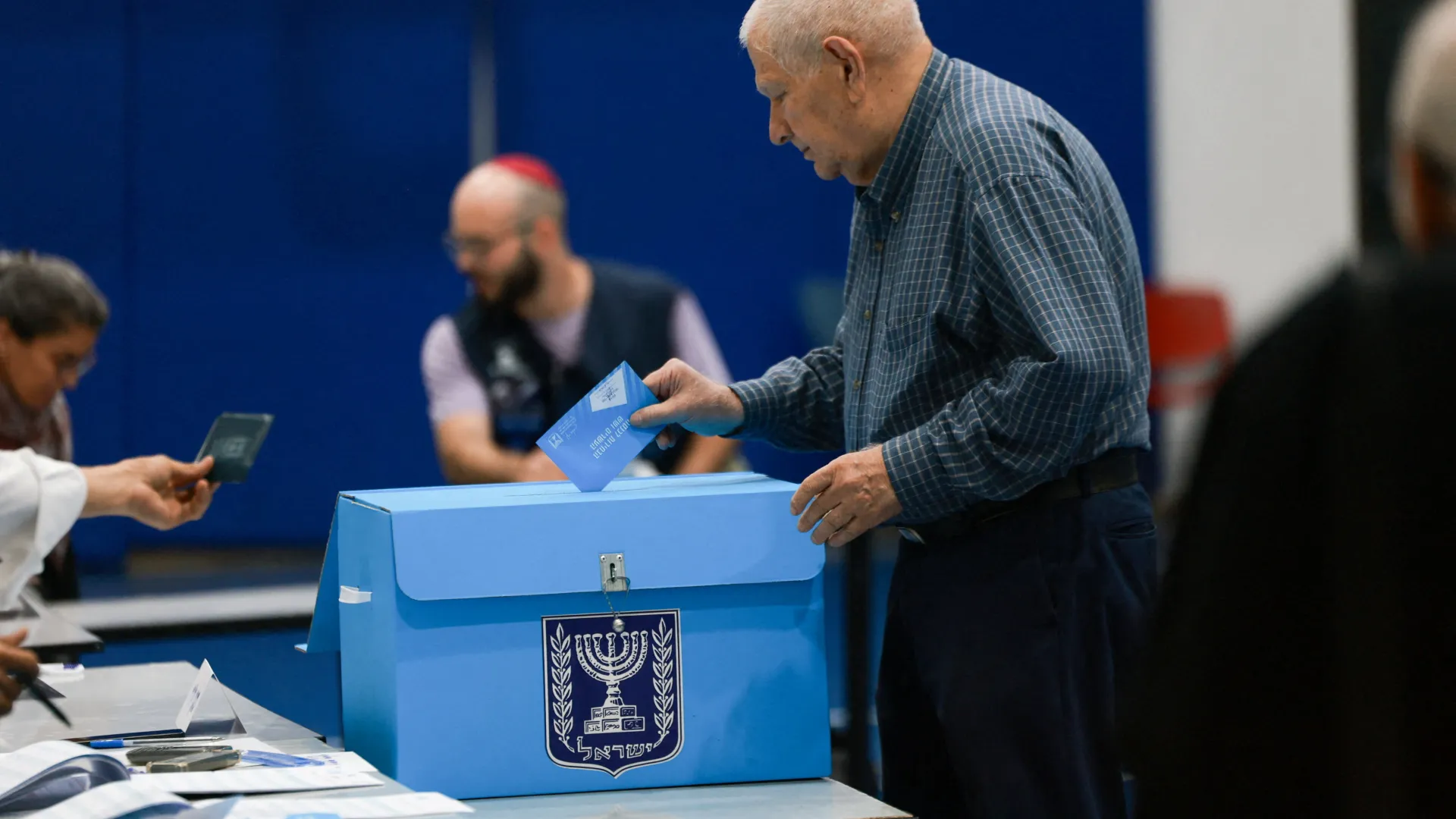
Israeli voters are heading to the polls on Tuesday in a closely watched parliamentary election that could determine the political future of Prime Minister Benjamin Netanyahu after years of war, political division and controversy.
More than 7.3 million eligible voters are expected to cast ballots to elect members of the 120-seat Knesset. Polling stations opened at 7 a.m. local time and are scheduled to close at 10 p.m.
The election is the first national vote since the Hamas-led October 7, 2023 attacks and the subsequent wars in Gaza, Lebanon and with Iran. Netanyahu, Israel’s longest-serving prime minister, is seeking another term after nearly two decades at the centre of the country’s political system.
His Likud party is facing a strong challenge from an opposition alliance led by former military chief Gadi Eisenkot. Opinion polls have indicated a close contest, although neither side is assured of the parliamentary majority needed to form a government.
Netanyahu has campaigned on his record during the wars and his close relationship with US President Donald Trump. His supporters argue that his experience and security policies are necessary to protect Israel amid continuing regional threats.
His opponents, however, have made accountability for the October 7 security failures a central issue. They have also criticised Netanyahu’s handling of the wars and his coalition government, while promising changes in the country’s political leadership.
The election is also being shaped by Netanyahu’s ongoing corruption trial, which he denies, and disagreements over the direction of Israel’s security and foreign policy.
Even if Netanyahu’s Likud emerges as the largest party, he would still need to secure enough support from other parties to form a governing coalition. Israel’s proportional representation system means that coalition negotiations could ultimately determine who becomes prime minister.
Far-right allies Itamar Ben-Gvir and Bezalel Smotrich could again play an important role in any Netanyahu-led government, while centrist and opposition parties are seeking to build an alternative coalition.
With no clear path to a majority for either major bloc, the election could produce prolonged coalition negotiations and potentially another period of political uncertainty.
The final result is therefore expected to depend not only on which party wins the most seats, but also on which political groups can assemble the 61-seat majority required to form a government.