

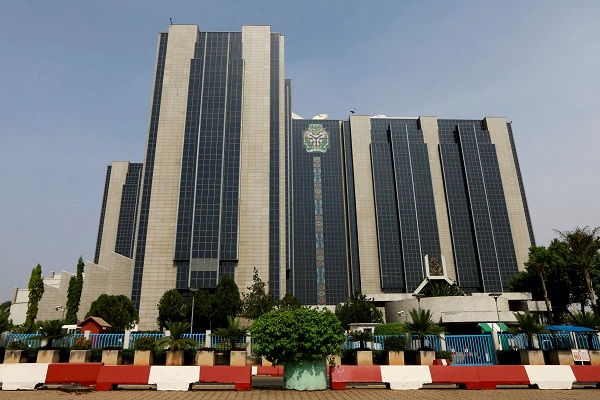
Eight commercial banks have fallen short of the Capital Adequacy Ratio (CAR) required for international authorisation, the stress test conducted by the Central Bank of Nigeria (CBN) has shown.
The affected banks have been put under pressure to raise their capital base to bridge the gap, which was brought about by the depreciation of the naira against the dollar and other foreign currencies.
Through its 2021 guidelines, the CBN had mandated the Deposit Money Banks to maintain a prudential CAR of 10 per cent for national and regional banks.
Those with international authorisation were instructed to uphold a 15 per cent regulatory CAR.
However, the CBN report showed a decline in the banking system’s CAR, dropping to 11.2 per cent, which is 3.0 per cent short.
This is below the 15.0 per cent threshold set for banks with international authorisation.
The decline in the banks’ CAR was attributed to a decrease in total qualifying capital relative to increased risk-weighted assets due to the naira’s depreciation following the adoption of a market-determined exchange rate policy. This reflects the challenges faced by these institutions.
The banks were scrutinised based on their capital strength and risk profile, a crucial measure of a bank’s financial stability.
The stress test was conducted to assess the banks’ financial health and their ability to withstand adverse economic conditions and shocks.
Specifically, the test focused on the CAR, which measures the proportion of a bank’s capital to its risk-weighted assets and is used to determine the bank’s financial stability.
The CAR is a regulatory requirement set by the CBN and each bank is expected to maintain a minimum level of capital to ensure their ability to absorb potential losses.
Based on the results of the stress test, it was discovered that among the affected banks with international authorisation, their capital adequacy ratio was lower than the minimum regulatory requirement set by the CBN.
This implies that these banks may have insufficient capital to meet potential losses during challenging economic conditions, which could potentially impact their overall financial stability.
The CBN’s revelation of the banks’ CAR falling below the minimum regulatory requirement emphasises the need for appropriate measures to be taken to address this issue.
It could prompt regulatory action, such as requiring the affected banks to raise additional capital or implement strategies to strengthen their financial position to mitigate any potential risks to the banking sector and the economy.
The depreciation, stemming from the CBN’s managed float of the exchange rate in June 2023, significantly impacted banks, leading to substantial foreign exchange losses.