

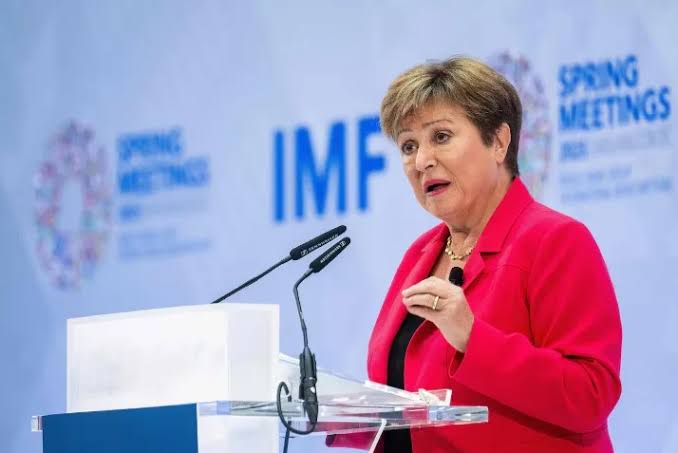
The International Monetary Fund (IMF) has upgraded its forecast for Nigeria’s economic growth for 2026 to 4.2 per cent but warned that rising energy and food prices, geopolitical tensions and potential market corrections linked to artificial intelligence (AI) threaten the global economic outlook.
The new forecast was contained in the IMF World Economic Outlook report October 2026, titled Resilience Under Strain, Urgent Choices”, released on Monday during the ongoing annual meetings of the IMF/World Bank in Bangkok, Thailand.
Furthermore, the new forecast represents one percentage point above the 4.1 per cent earlier projected by the IMF in the July 2026 edition of its WEO.
According to the IMF, “Growth in sub-Saharan Africa is expected to remain stable at 4.5 per cent in 2026, though this masks substantial divergence across countries, reflecting differences in policy space, reform implementation, commodity exposure, climate shocks, and access to external financing.
“Oil-importing, non-resource-intensive economies are more adversely affected by higher energy and food prices, whereas some larger economies continue to benefit from earlier stabilisation and reform efforts, even though they are largely absent from the AI-driven global technology upswing and face headwinds from declines in official development assistance.
“Nigeria is supported by improved macroeconomic stability and favourable terms-of-trade effects, though higher prices for essentials are expected to further aggravate poverty and food insecurity.”
Speaking at the press briefing on the WEO report, Sylvana Tenreyro, the IMF’s Economic Counsellor and Director of the Research Department, said, “The global economy has been resilient, but that resilience is under strain, with risks tilted to the downside.”
She added, “The task ahead is to move from coping to rebuilding,” stressing the need to restore fiscal space, strengthen supply-side resilience and improve countries’ capacity to withstand future economic shocks.
Explaining the global outlook, Tenreyro identified energy and commodity price increases as major factors weighing on economic activity, while investment associated with artificial intelligence had provided support for growth.”
The IMF report noted that the global economy had withstood repeated shocks, including geopolitical conflicts and trade tensions, but cautioned that “these margins of adjustment are not unlimited.”