

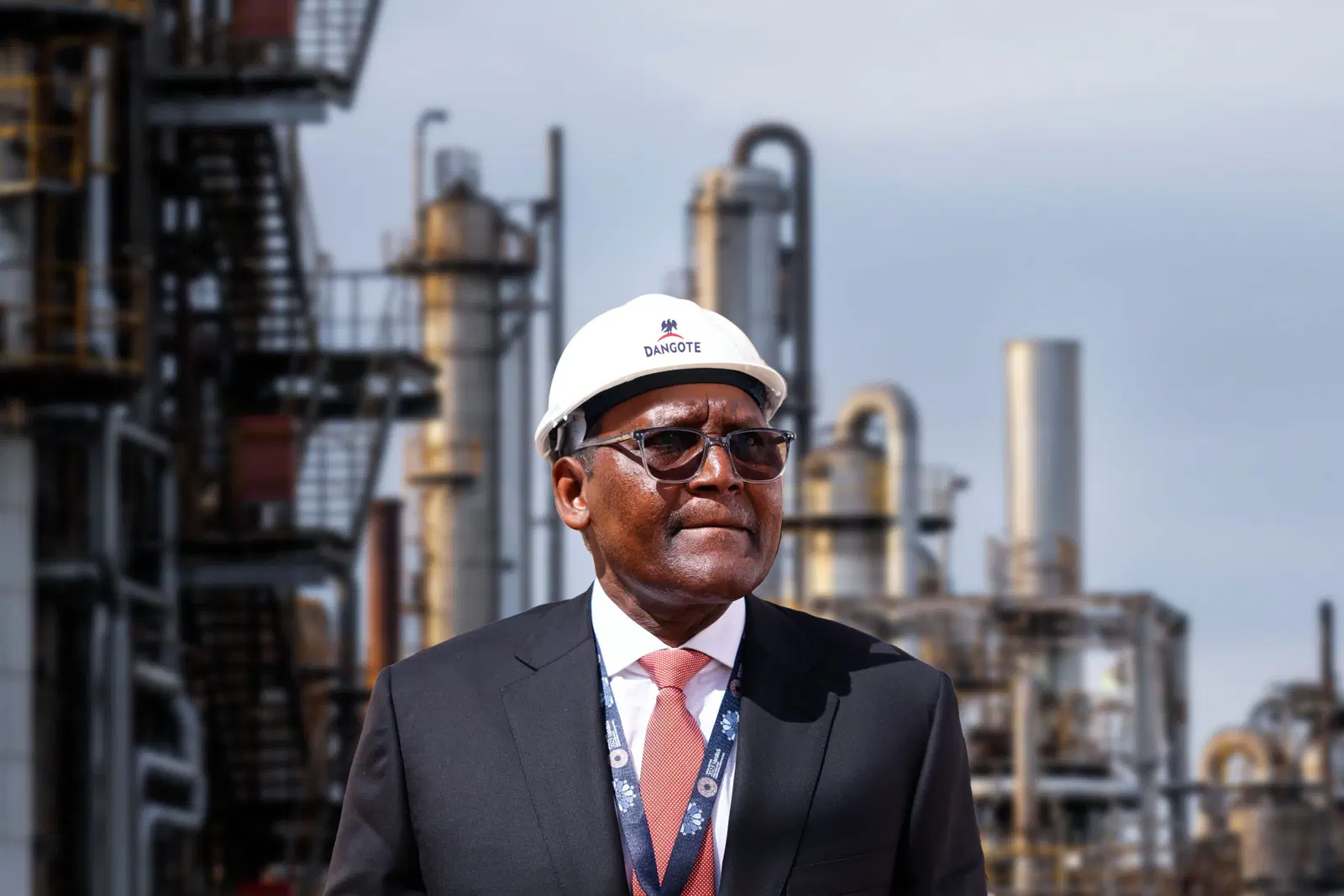
Nigerian billionaire Aliko Dangote has revealed that his determination to end Nigeria’s long-standing fuel scarcity crisis was a major reason behind the construction of the Dangote Refinery.
Dangote said it was troubling that Nigerians often spent hours and sometimes days queuing for fuel despite the country being one of Africa’s largest oil producers.
Speaking in an interview with the Chief Executive Officer of Norway’s sovereign wealth fund, Nicolai Tangen, Dangote said the refinery project, which began in 2013, faced numerous obstacles, including resistance from vested interests in the oil sector.
“We looked at oil. Africa produces oil, but many countries don’t refine it. They export crude and import refined products, which drains foreign reserves,” he said.
“In Nigeria, we had fuel queues for more than 50 years. People queued for days during Christmas just to buy petrol in an oil-producing country. Government refineries were not functioning properly, so I decided to take the bold step of building a refinery.”
Dangote explained that the project encountered major setbacks, including delays in land acquisition and the huge cost of building supporting infrastructure.
“We launched the project in 2013. Land acquisition alone delayed us for five years. Some of these obstacles were created by entrenched interests in the oil business — what you might call a mafia — trying to stop us from solving these problems. But we stayed focused,” he said.
He added that the company had to build its own port because existing Nigerian ports could not handle the heavy equipment needed for the refinery.
“When we started, the naira exchange rate was ₦156 to the dollar. At one point it went as high as ₦1,900, but we still continued,” Dangote stated.
He further disclosed that the refinery required extensive supporting infrastructure, including roads, water systems and a massive water treatment facility covering more than 30 hectares.
“The refinery alone uses 440 million litres of treated water,” he added.
Dangote said the project was pursued despite the challenges because of its importance to Nigeria’s and Africa’s long-term energy security.