

The Independent National Electoral Commission (INEC) has removed 1,608,660 confirmed invalid voter registrations from the preliminary national register ahead of the 2027 general elections, while identifying 54 officials across 10 states for possible disciplinary action over registration irregularities.
INEC Chairman, Professor Joash Amupitan, disclosed this on Monday, November 9, during a press briefing in Abuja on the outcome of the commission’s nationwide review of the preliminary voters’ register.
The commission also removed 873 records belonging to verified deceased persons, bringing the total number of records deleted under the exercise to 1,609,553.
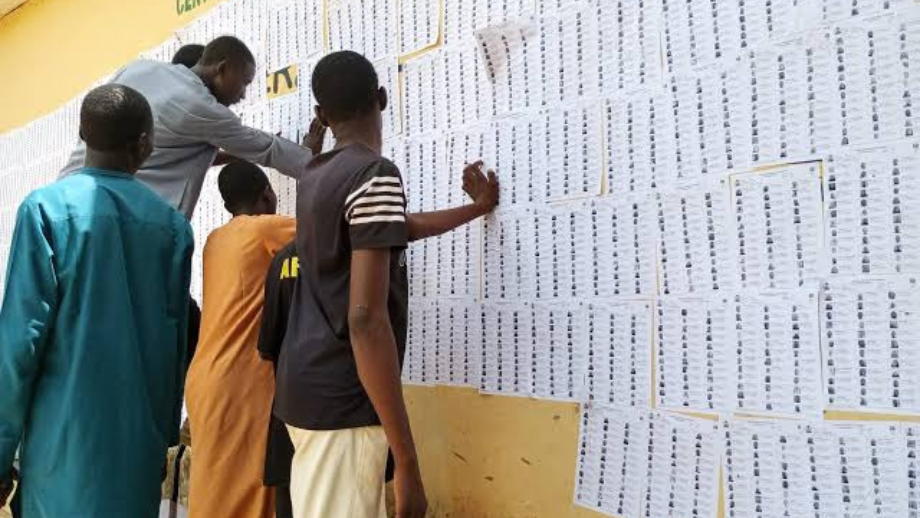
Amupitan said the clean-up followed public complaints, claims and objections raised after the preliminary register was displayed at registration areas between October 9 and 15, 2026, and subsequently published online.
According to him, the commission harvested 11,088,238 registration records from the three phases of the 2025/2026 Continuous Voter Registration (CVR) exercise. These records were screened using the Automated Biometric Identification System (ABIS), which initially flagged 1,545,052 entries for further examination.
He explained that being flagged by the system did not automatically mean a registration was invalid, as each case had to undergo further review and adjudication.
Following the review, INEC confirmed and removed 1,277,052 invalid registrations before the publication of the preliminary register. An additional 268,000 cases were examined after public complaints, with 217,722 declared invalid and removed, while 50,278 were cleared and retained.
Further screening identified another 113,886 invalid registrations, bringing the total number of confirmed invalid entries removed to 1,608,660.
The INEC chairman also disclosed that investigations uncovered instances in which some registration personnel allegedly bypassed established procedures and abused provisions designed for exceptional registration circumstances, including those relating to persons with disabilities.
He said 54 individuals across 10 states had been identified as complicit in the irregularities and would face necessary administrative disciplinary measures, including possible prosecution.
Amupitan added that INEC was strengthening its registration procedures through improved biometric capture, authentication and verification safeguards to prevent a recurrence.
The chairman, however, cautioned that the latest exercise had not resolved every concern surrounding the national voters’ register, noting that some suspected duplicate entries and manipulated photographs circulating online were linked to registration exercises conducted between 2011 and 2023.
He also addressed complaints from voters who discovered that their names were missing from the preliminary register. According to him, many had registered previously but completed fresh registrations after relocating instead of transferring their existing voter records.
He explained that the biometric system invalidated their subsequent registrations, while their original records remained at their former registration locations. He therefore advised affected voters to check their previous polling locations.
INEC said the current clean-up exercise relating to the 2025/2026 registration had been concluded, while final reconciliation, quality assurance and publication checks were ongoing. The commission has scheduled December 15, 2026, for the publication of the final voters’ register.
The development comes amid growing public scrutiny of the electoral register following concerns over duplicate registrations, suspicious photographs, suspected artificial intelligence-generated images and the inclusion of deceased persons.
With the 2027 general elections approaching, the commission says it remains committed to removing invalid entries while ensuring that eligible Nigerians are not wrongly excluded from exercising their right to vote.