

Nigeria’s worsening cost-of-living crisis is forcing many households to prioritise filling meals over balanced nutrition as rising food prices continue to strain family budgets across the country.
Across many homes, meals that once comfortably fed entire families are now being stretched, with smaller portions, reduced protein intake and skipped breakfasts becoming increasingly common.
The situation comes as the Federal Government raises concerns over a growing food safety crisis, revealing that unsafe food contributes to nearly 50 million illnesses and more than 53,000 deaths annually, with children under five accounting for the majority of cases.
For many families, feeding has become more about survival than nutrition.
A mother of four in Lagos, Adebimpe Olatunji, said breakfast is often skipped to make food supplies last longer.
“We manage. The children may take bread before school, then the proper meal comes later. Sometimes everybody skips breakfast,” she said.
Another parent, Patricia, added: “It is no longer about eating well, it is just making sure everybody eats something.”
The impact is also being felt in schools. Public school teacher Tunde Lawal said some pupils now arrive without food for break time.
“You can tell when a child has not eaten properly. Some struggle to pay attention,” he said.
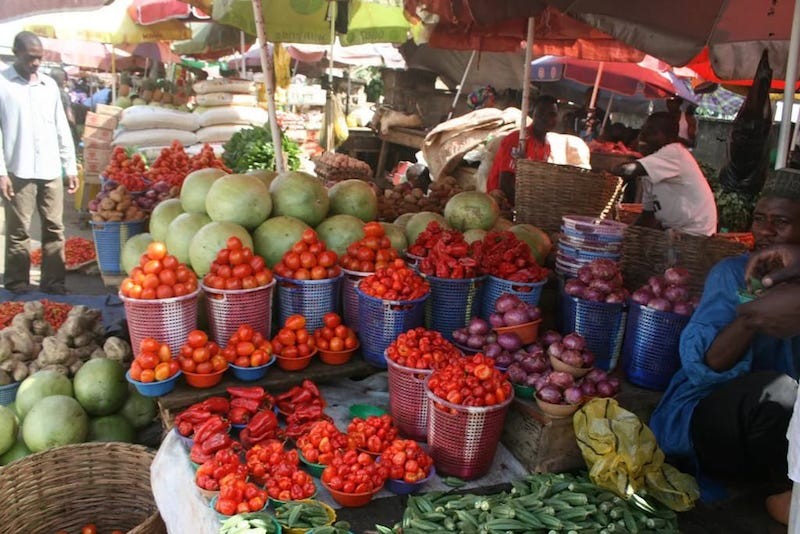
Traders in Lagos markets report significant changes in consumer behaviour as households buy smaller quantities of food.
According to data from the National Bureau of Statistics, food inflation remained high throughout 2025, with the prices of staples such as rice, beans, yam and maize recording sharp increases.
Market surveys show that rice, which sold for about N250 to N300 per kilogram in 2015, now costs between N1,800 and N2,200, while beans have risen from roughly N300 to as much as N2,800 per kilogram. A crate of eggs that once sold for less than N1,000 now costs up to N6,000 in some areas.
The rising costs have significantly altered household budgets. Findings indicate that a family of five that spent between N35,000 and N45,000 monthly on food in 2015 may now require between N200,000 and N300,000 to maintain similar feeding patterns.
Nutrition experts warn that when finances become strained, protein-rich foods, fruits and vegetables are often the first items removed from family meals.
Community nutrition practitioner Eunice Obi said many households now rely heavily on starch-based foods because they are more affordable and filling.
“People depend more on starch now because they just want food that fills the stomach,” she said.
Health experts warn that such dietary changes can lead to hidden malnutrition, particularly among children and pregnant women, even when people appear to eat regularly.
The Nutrition Society of Nigeria has repeatedly expressed concern about declining access to nutritious foods, noting that poor nutrition often develops gradually before visible health complications emerge.
Nutritionists, however, say healthy eating remains possible through careful meal planning and increased reliance on affordable local foods such as beans, millet, sweet potatoes, groundnuts and vegetables.
They advise households to prioritise balanced diets, reduce food waste and take advantage of bulk purchasing where possible to cope with rising food costs.