

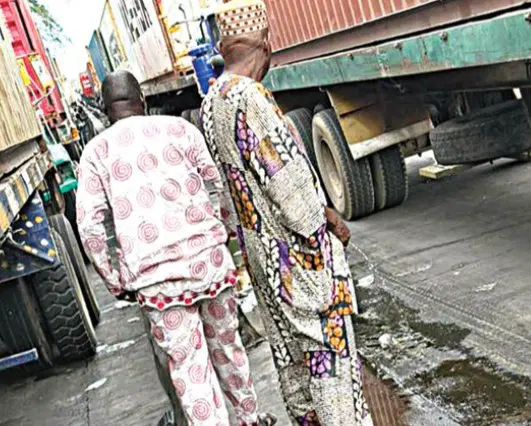
LAGOS — Truck drivers, residents and stakeholders along Nigeria’s ports corridor have raised concerns over worsening sanitation conditions, citing widespread open defecation, indiscriminate waste disposal and poor environmental management along the busy access roads leading to the nation’s seaports.
The development has sparked a blame game between the Nigerian Ports Authority and the Apapa Local Government Area over responsibility for maintaining cleanliness around the corridor.
The situation, particularly along routes used by tankers and articulated vehicles heading to the ports, has become a source of embarrassment for residents and road users who daily encounter human waste and heaps of refuse littering the area.
Speaking with journalists, truck drivers and community members expressed frustration over what they described as a persistent environmental and public health hazard despite the huge revenues generated through port operations.
Officials of the Nigerian Ports Authority maintained that their responsibilities are limited to activities within port premises, arguing that sanitation on surrounding roads falls under the jurisdiction of local authorities.
However, officials of Apapa Local Government insisted that the port corridor remains under federal control, making intervention difficult for the council.
A senior local government official, who spoke anonymously, said the council regularly deploys sanitation workers to the area but faces significant challenges due to the presence of stationary trucks and limited authority over the corridor.
“When we go there, they say it is a port and a federal government entity. The local government cannot intervene freely. The truck drivers stay there overnight, and by morning our sweepers encounter human waste all over the place,” the official said.
He added that despite efforts by the council to evacuate refuse, the gridlock caused by parked trailers makes proper sanitation difficult.
“Our refuse trucks are available, but how do we move trailers blocking the roads to clear the waste? The trucks remain there for long periods, and we are left to deal with the consequences,” he said.
The official also lamented that the local government receives no revenue from companies operating within the port environment, despite bearing part of the burden of maintaining sanitation around the area.
Stakeholders have called for stronger collaboration between federal agencies, port authorities and local government officials to address the growing environmental concerns and improve hygiene standards along one of Nigeria’s busiest commercial corridors.